
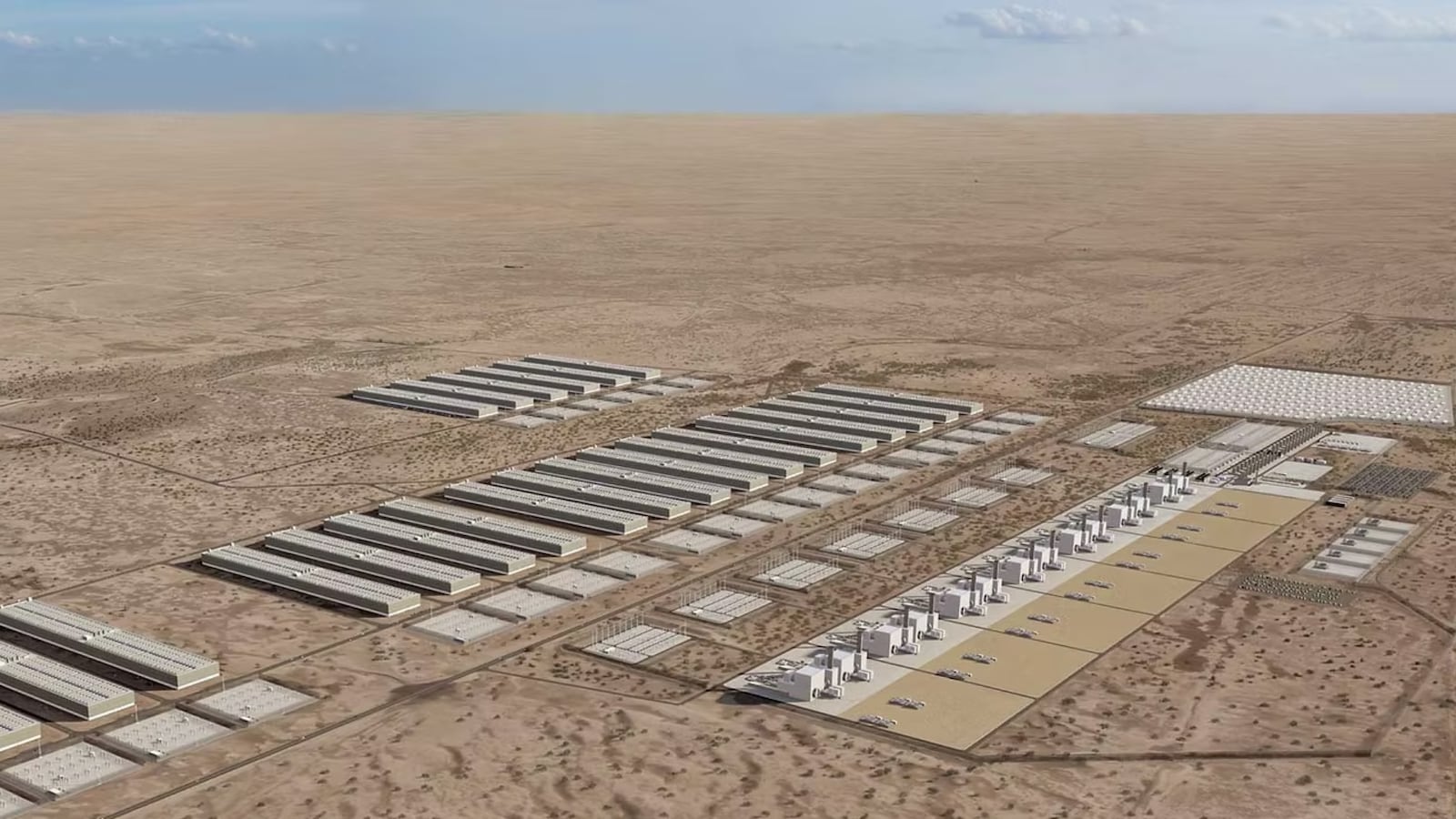
The accelerated construction of new data centers in Texas could lead to air pollution levels not seen since the 2000s. This state has become the epicenter of the physical infrastructure needed for generative artificial intelligence, which has generated a massive demand for electricity. According to a report by The Verge, how developers and utility companies decide to meet this demand could determine the long-term environmental impact in the region.
The concern is that many of these new data centers could rely on energy sources that increase emissions of polluting gases. The infrastructure needed to support generative AI is growing rapidly, and Texas, with its capacity to host large facilities, is at the center of this expansion. "A boom of new data centers could bring back air pollution levels not seen since the 2000s in Texas," the report notes.
It adds: "Tech companies and data center developers are devising new ways to obtain enough electricity, including building their own energy sources. However, if all the planned data center projects in Texas were connected to the power grid and powered by the expected mix of sources, the pollutants that form soot and smog would skyrocket, according to a new report from the Houston Advanced Research Center (HARC). In just five years, the pollution would be enough to undo decades of progress in air quality."
Why it matters
The relevance of this phenomenon lies in the potential setback in the advances made in air quality over the past decades. Texas has been an example of how a growing economy can coexist with environmental improvements, but the expansion of data centers could jeopardize these achievements. The tech industry must consider the environmental impact of its operations, especially in a context where climate change is a global concern.
For society, this represents a dilemma between technological advancement and environmental sustainability. The capacity of IT infrastructure to sustain the growth of generative AI must be balanced with the need to maintain a healthy environment. How this challenge is addressed could set precedents for other regions seeking to host large-scale data centers.
“Our analysis is cause for concern. There is a high likelihood that our children and grandchildren will breathe more polluted air than we do,” stated John Hall, executive director of HARC. “The transportation sector, the state, and other stakeholders have been working for decades to successfully reduce these numbers, and now that progress is at risk.”
What's next
However, the study opens the possibility for less dire scenarios. Supplying data centers with a mix of one-third grid electricity and two-thirds on-site renewable energy, such as solar and wind, would reduce NOx and CO2 emissions by approximately two-thirds compared to a scenario where data centers are powered solely by grid electricity.
The future of air quality in Texas will depend on the decisions made by developers and electric companies regarding the energy sources used. Cleaner alternatives, such as solar and wind energy, could mitigate the environmental impact, but they require significant investments and a long-term commitment. Government regulations will also play a crucial role in the direction this expansion takes.
In the coming months, clearer policies are expected to be defined regarding the development of data centers and their environmental impact. The companies involved may be forced to adopt more sustainable practices to obtain construction and operation permits. The local community and environmental groups will surely be vigilant about how this growth is managed.
Context
Texas has historically been a state with a robust economy, driven by sectors such as energy and technology. The arrival of large data centers is no surprise, given its appeal to tech companies for its resources and capacity for expansion. However, this growth has brought significant challenges in terms of sustainability.
Environmental regulation in Texas has been a topic of debate, with some sectors advocating for a more lenient approach to foster economic growth. However, international pressure and growing concerns about climate change have led to a reevaluation of these policies. The state is at a crossroads between maintaining its appeal for tech investment and protecting its natural environment.
Read more: The Verge, HARC Research