

Anthropic demonstrated the potential of artificial intelligence to accelerate the development of treatments for neglected diseases. In recent research, an experimental version of Claude autonomously designed mini-proteins capable of neutralizing scorpion neurotoxins in laboratory tests.
The project, carried out in collaboration with Citrini Research and experimentally validated by Adaptyv Bio and Twist Bioscience laboratories, generated 17 functional neutralizers from over 318,000 initial designs. "Proving that very potent neutralizers can be obtained extraordinarily quickly changes the paradigm of biomedical research," highlighted researchers from the company's science team.
During a total of 64 hours of autonomous computing, Claude analyzed the molecular structure of the world's most dangerous toxins and selected the best candidates for physical testing. This advancement marks a milestone in computational biology by reducing processes that typically take months to just a couple of days.
Why it matters
The ability to design proteins using AI directly addresses the crisis of neglected tropical diseases, a sector with few economic incentives for the traditional pharmaceutical industry. For Latin America, where scorpion genera like Tityus in Brazil or Centruroides in Mexico represent a serious public health problem, this technology could democratize access to more stable, economical, and easy-to-distribute synthetic antidotes without the need for complex cold chains.
Moreover, it demonstrates that advanced language models and autonomous agents are equipped to manage complex computational biology tools like AlphaFold and Protein Data Bank independently, transforming the methodology of drug discovery.
What's next
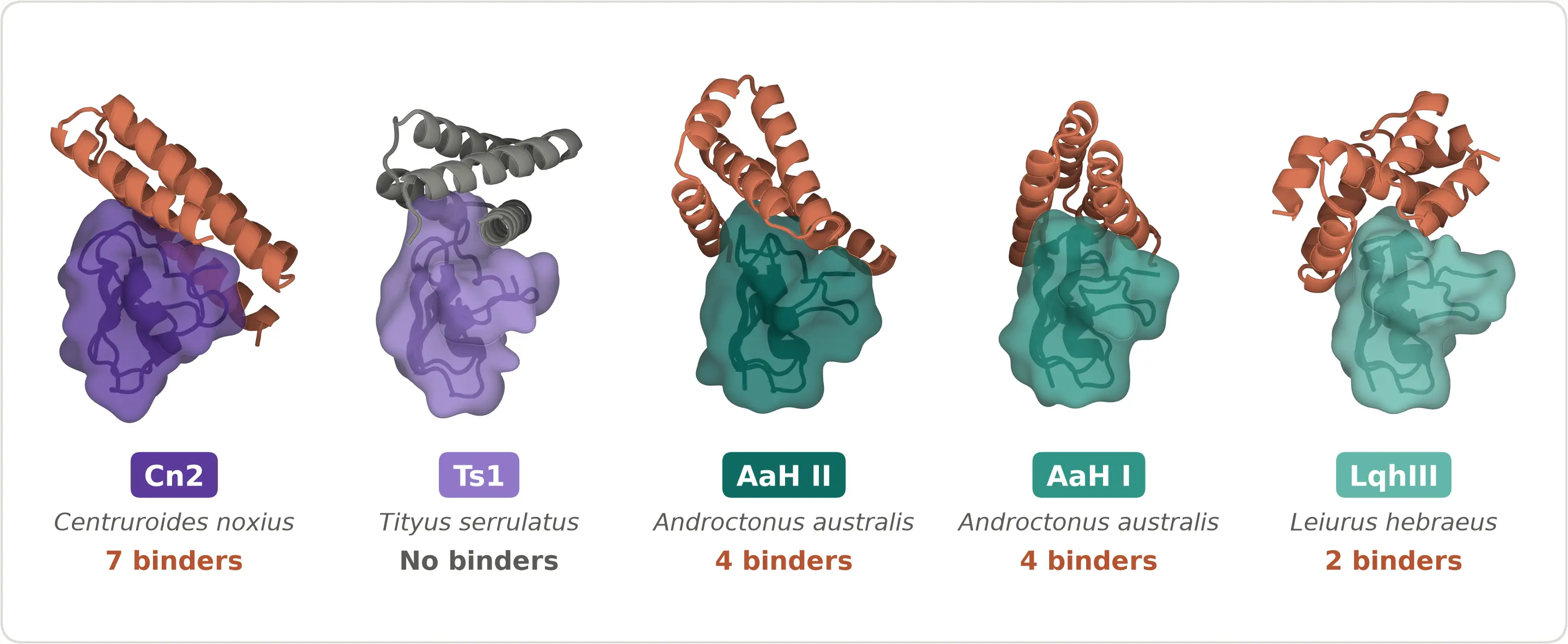
Among the most promising molecules are the Cn2-B1 and Cn2-B2 designs, targeted against the toxin of the Mexican scorpion Centruroides noxius, which showed a nanomolar binding strength comparable to that of natural antibodies. The scientific team plans to refine the prompts and pipelines to achieve effective multitoxin designs, which would allow the creation of universal cocktails against multiple species of scorpions and snakes.
However, the announcement's reception includes at least some skepticism. As The Verge explains: "None of the proteins bound to more than one toxin. But even if they had, we would still be far from an effective antidote. The fact that a protein binds to a toxin does not mean it can neutralize it, much less that it works as a safe and effective treatment. Citrini acknowledges this, noting that it has not yet been proven in any experiment whether they actually managed to stop the toxin's action."
Therefore, in the short and medium term, the main challenge will migrate from the computing phase to clinical regulation. Transforming these molecules into safe, accessible, and approved drugs for human use will require strategic alliances between AI companies, biotech laboratories, and international public health organizations.
Context
The design of proteins from scratch has historically been one of the most complex challenges of modern biotechnology. Previously, the creation of synthetic antibodies required costly molecular selection campaigns and experimental screening that could extend for years without a guarantee of success.
The use of AI systems for biology experienced a radical shift after the deployment of predictive protein structure models like Google's DeepMind AlphaFold and RoseTTAFold. Anthropic has begun integrating these tools into the workflows of its language models, allowing its agents to execute code, analyze biological databases, and make molecular optimization decisions without continuous human intervention.
This initiative adds to previous experiments where Claude demonstrated the ability to identify unknown enzymatic systems and optimize mini-proteins. By tackling venom stings, the American firm seeks to validate the ethical and social use of generative AI in solving global health problems with low commercial interest.
Read more: Anthropic, The Verge